

Posted 1 week ago
Mon 16 Mar, 2026 12:03 PM
Meningitis is a serious but fortunately rare illness. You may have seen recent news about an outbreak of Meningitis B affecting students at the University of Kent. While such cases are concerning, it’s important to remember that meningitis occurs very infrequently, including within university communities.
Do you know the symptoms? Are you protected? Here's what you need to know to make sure you, your friends and flatmates stay safe and healthy.
First things first, anyone becoming unwell with symptoms of meningitis and septicaemia, should seek medical help urgently at the closest Accident and Emergency Department or by dialling 999. Early treatment can be lifesaving.
What is meningitis and septicaemia?
Meningococcal disease is a cause of meningitis and septicaemia (blood poisoning). Meningitis and septicaemia develops quickly and can leave people with life changing disabilities or can be fatal.
What are the symptoms?
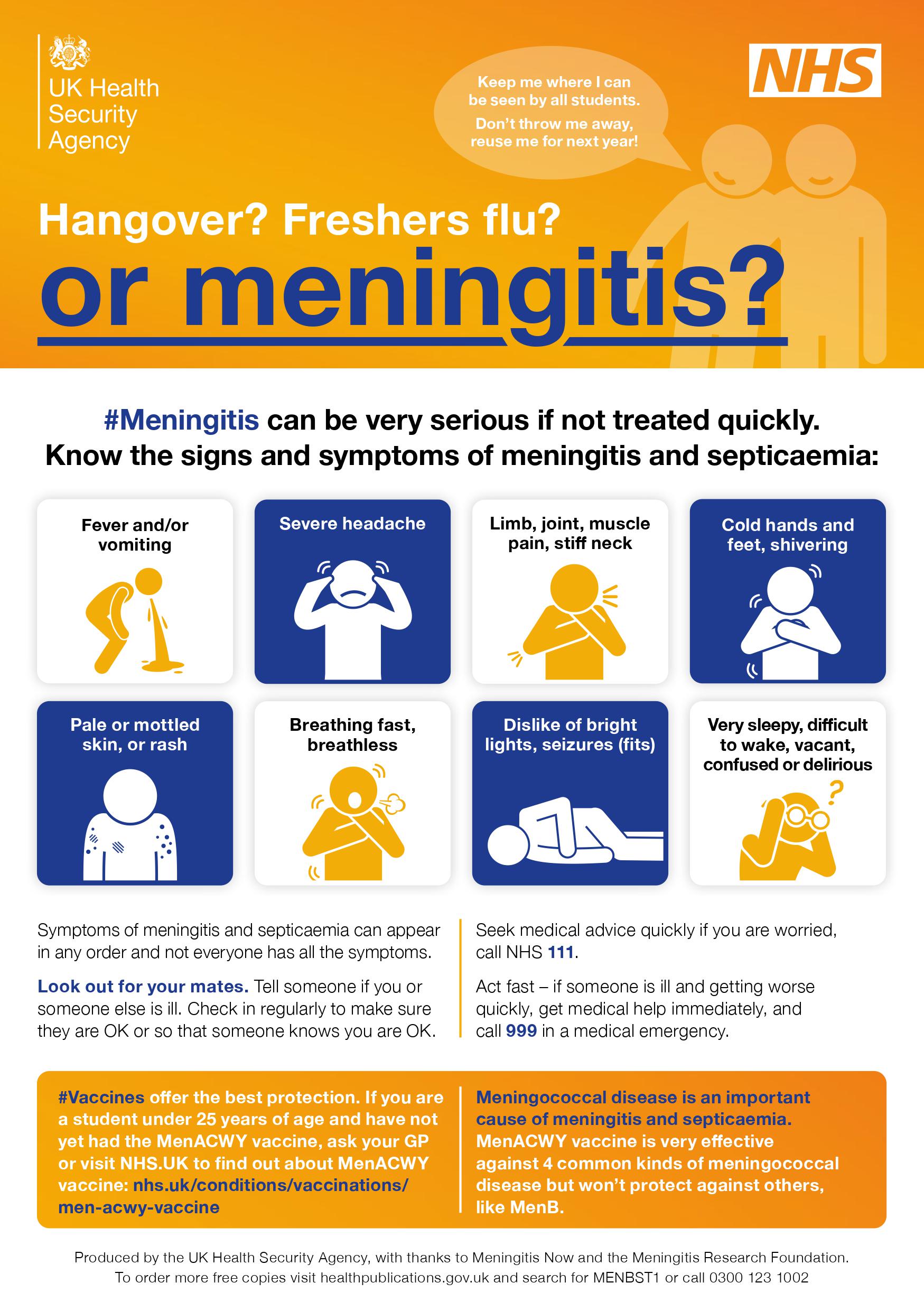
Symptoms can start like a bad case of flu but they get worse very quickly. They can appear in any order and some may not appear at all. In the early stages, there may not be a rash, or if there is a rash the rash may fade on pressure. You should be alert to the signs and symptoms and should not wait for a rash to develop before seeking medical attention urgently.
Be aware of symptoms such as:
- a severe headache
- vomiting
- a stiff neck
- muscle and joint pain
- pale, blotchy skins / spots / rash
- a high temperature/fever
- cold hands and feet
- a dislike of bright lights
- drowsiness or difficulty waking up
Read more on Meningitis symptoms on the NHS website.
Act quickly
Trust your instincts and act quickly if you're concerned (check out the NHS website for more details on symptoms).
Always look out for friends and flatmates, especially if they go to their bedroom feeling unwell. You should get medical advice as soon as possible if you’re concerned that you or a flatmate could have meningitis. Call 999 for an ambulance or go to your nearest A&E immediately.

How can you protect yourself from meningitis and septicaemia?
Register with a local GP and get the MenACWY vaccine (as well as your MMR vaccine). It's a quick, single injection to the upper arm and it gives you protection against four different kinds of the meningococcal bacteria that cause meningitis and septicaemia: A, C, W and Y.
To get the vaccine, you just need to sign up to your local GP if you haven't already. You can register with your local GP here.
The vaccine is very effective in preventing cases of Meningitis A,C,W and Y disease but does not protect against other types of meningitis, like MenB, so it is important to know the signs and how and when to seek help if someone is ill.
Not sure if you're protected?
Not a problem - just reach out to your GP and ask. You can register with Brownlow Health to find out and book your vaccine if needed.
What to do if you suspect meningitis or septicaemia?
You should get medical advice as soon as possible if you’re concerned that you could have meningitis. Call 999 for an ambulance or go to your nearest A&E immediately. If someone is ill and worsening quickly, get medical help immediately by calling 999.
Meningitis a survivor's story


